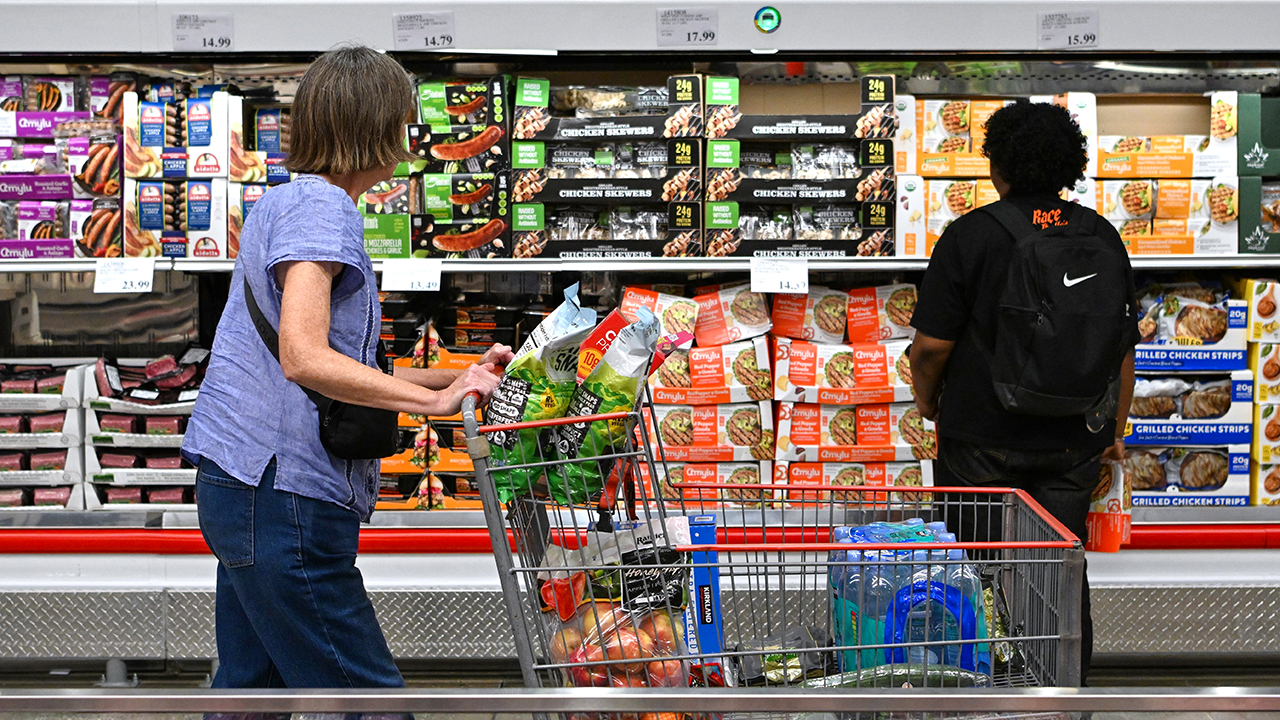
Inflation accelerated in October as the pace of consumer price growth trended higher.
The Bureau of Labor Statistics (BLS) said on Wednesday that the consumer price index (CPI) – a broad measure of how much everyday goods like gasoline, groceries and rent cost – increased 0.4% on a monthly basis.
It did not release an annual figure due to last year’s government shutdown that prevented collection of October 2025 data.
The monthly figure was slightly higher than the estimates of economists polled by LSEG, who expected inflation to rise 0.3% from the prior month.
So-called core prices, which exclude volatile measurements of gasoline and groceries to better assess price growth trends, were up 0.3% in October.
That figure is slightly higher than the 0.2% estimate of economists polled by LSEG. Like with headline CPI, the BLS was unable to release a year-over-year figure for core CPI due to last year’s government shutdown disrupting data collection.
High inflation has created severe financial pressures in recent years for most U.S. households, which are forced to pay more for everyday necessities like food and rent. Price hikes are particularly difficult for lower-income Americans because they tend to spend more of their already-stretched paychecks on necessities and have less flexibility to save.
Energy prices rose 0.7% on a monthly basis in October, which is much cooler than the 5.2% reading in September and the 2.1% rise recorded in August. The energy index had experienced monthly drops earlier in the summer amid volatility in oil and gas prices due to the Iran war.
Gasoline prices increased 1% in October, which followed a similar cooling trend after readings of 9.1% in September and 3.9% in August.
Food prices were up 0.5% from the prior month in October, the largest increase for the broader index since April. The food at home index was up 0.4%, while the food away from home index rose 0.5% from the prior month.
FEDERAL RESERVE MAKES INTEREST RATE DECISION AHEAD OF MIDTERMS
The meats, poultry and fish index rose 0.5% last month. Beef and veal rose 0.9% in October, while egg prices increased 0.6%. The fruits and vegetables index increased 0.6% in October. Coffee prices fell 3.6% during the month.
Housing prices increased 0.3% on a monthly basis, while tenants’ and household insurance costs were up 0.1% in October.
The transportation services index rose 0.8% in October with airfares rising 0.4% for the month.
EY-Parthenon chief economist Gregory Daco said that “Inflation surprised to the upside in October, with broad-based pressures across food, goods and services.”
“The hotter and broader inflation report likely seals the deal for a Fed rate hike in December. The latest employment report gives policymakers greater latitude to focus squarely on inflation for now. While the Fed justified its October hold by pointing to the lack of urgency to tighten policy, failing to deliver the expected December hike would risk calling into question its resolve to restore price stability,” Daco added.
WHY THE FED ISN’T READY TO DECLARE VICTORY ON INFLATION
Heather Long, chief economist at Navy Federal Credit Union, said that the report showed that inflation remains the main problem facing the U.S. economy and that the “Federal Reserve has to act in December.”
“Inflation came in hot in October and it wasn’t just gas prices. Grocery prices jumped with the biggest monthly gain since April, and electricity saw another big gain,” Long said. “This is painful for many Americans when so many basic necessities are rising in price.”
Long added that while the BLS didn’t publish the year-over-year CPI inflation figures due to the government shutdown last year, the “implied rate is around 4%, well above wage gains of 3.1% in the past year.”
The Federal Reserve is set to hold its next monetary policy meeting on Dec. 8-9 and policymakers are overwhelmingly expected to hike interest rates in the wake of the October CPI inflation report.
The market sees an 87.3% probability of a 25-basis-point hike to a new target range of 4% to 4.25%, up from 84% a day ago and 77% a week ago, according to the CME FedWatch tool.
It also sees a 12.7% chance of a 50-basis-point rate hike in December, up from 0% yesterday and last week, while the tool showed the odds of the Fed leaving rates at their current level fell from 16% yesterday to 0%.
The benchmark S&P 500 Index fell more than 0.4% in Tuesday morning trading following the release of the October CPI inflation report.
The Dow Jones Industrial Average and Nasdaq Composite were also down a little more than 0.4%.